Read the table as follows: the daytime high is the average of all daily maximums for that month across 1991–2020, the overnight low the average of all daily minimums, and the wet-day share the fraction of days with at least 1 mm. For the week ahead, use the live Santorini forecast.
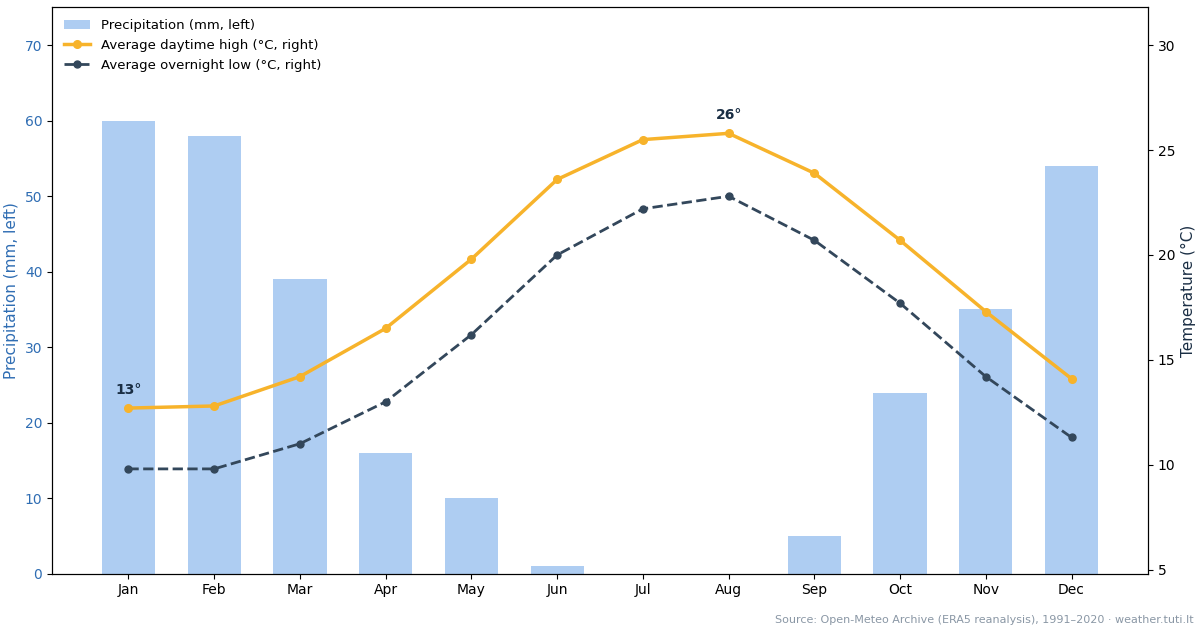
| Month | Avg. daytime high | Avg. overnight low | Avg. precipitation | Days with ≥1 mm | Daylight |
|---|---|---|---|---|---|
| January | 12.7 °C | 9.8 °C | 60 mm | 34% | 10.0 h |
| February | 12.8 °C | 9.8 °C | 58 mm | 33% | 10.9 h |
| March | 14.2 °C | 11.0 °C | 39 mm | 21% | 12.0 h |
| April | 16.5 °C | 13.0 °C | 16 mm | 11% | 13.1 h |
| May | 19.8 °C | 16.2 °C | 10 mm | 6% | 14.1 h |
| June | 23.6 °C | 20.0 °C | 1 mm | 2% | 14.6 h |
| July | 25.5 °C | 22.2 °C | 0 mm | 0% | 14.4 h |
| August | 25.8 °C | 22.8 °C | 0 mm | 0% | 13.5 h |
| September | 23.9 °C | 20.7 °C | 5 mm | 3% | 12.4 h |
| October | 20.7 °C | 17.7 °C | 24 mm | 12% | 11.3 h |
| November | 17.3 °C | 14.2 °C | 35 mm | 21% | 10.2 h |
| December | 14.1 °C | 11.3 °C | 54 mm | 31% | 9.7 h |
A volcanic rim with a wind habit
Santorini's caldera villages sit 200–300 m above the sea on the rim of a drowned volcano, which does two things: the views are the product, and the wind is the tax. In summer the meltemi — a dry northerly that sweeps the Aegean — arrives in multi-day spells: it trims the heat (a genuine blessing at 30 °C) but also funnels between the Cyclades, making catamaran crossings choppy and beach days breezy.
The rim also means evening cool arrives early and sharply: caldera-side dinners in May and October regularly need a layer, even after a warm afternoon.
May and June: the season opens
May brings average highs of 19.8 °C, low rain (10 mm) and daylight to 14.1 hours; June reaches 23.6 °C with almost no rain (1 mm). The island is green from the spring, the cruise calendar is lighter than August's, and the caldera sunset at Oia is comfortably watchable.
For a first visit, these two months are the easiest compromise between warm-enough sea and not-yet-overwhelming crowds.
July and August: heat, wind and full season
July averages 25.5 °C and August 25.8 °C, with overnight lows near 22.2 °C and rain essentially absent (0 mm). The meltemi can take the edge off the afternoon heat — and off the beach umbrella's stability. This is the island's busiest stretch: book caldera-view rooms many months ahead.
The practical rhythm: sunrise walks along the rim (Fira to Oia before the heat), pools or east-coast beaches midday, and the famous sunset watched from a pre-booked terrace rather than the middle of the Oia scrum.
September and October: warm sea, softer light
September keeps summer's warmth (23.9 °C average high) as the meltemi fades and the sea peaks from the summer's heating; October cools to 20.7 °C as the first autumn fronts arrive (24 mm). Hotels begin closing late in the month — the classic Greek shoulder-season signal.
Photographically these are the best months: softer light on the white-and-blue, clearer air than late summer haze, and vineyard country (yes — Santorini's assyrtiko vines) at harvest.
November to April: the closed island
From November the fronts roll through (November averages 35 mm) and the wettest stretch lands in December–January (54 mm and 60 mm) while days stay mild — January averages a daytime high of 12.7 °C. Many caldera hotels, tavernas and the some of the boat lines shut for the season; what remains is a local's island: quiet, cheap, dramatic in winter light.
If a winter Aegean trip appeals, plan around the ferries' reduced timetables and the hourly forecast — clear weeks exist between the fronts, and an empty Oia at golden hour is a genuine experience.
So, when should you go?
- First visit, caldera-and-sunset trip: late May–June or September — warm, open, manageable.
- Sea-first traveller: July–August with wind in mind; or September for the warmest water.
- Photographer: October — soft light, quieter rim, harvest season.
- Slow, budget traveller: the closed season, with reduced services and a working forecast.